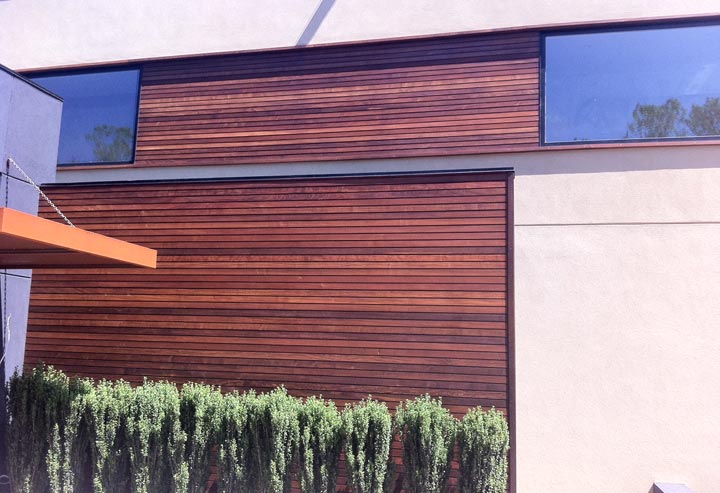
Wood, revered for its timeless beauty and natural appeal, has been incorporated into architectural design for centuries. Today, it is being used more and more in contemporary architecture as a highly visible, exterior construction component through beautiful wood cladding. The choice of wood species for cladding plays a crucial role in determining aesthetics, longevity, and performance. Let’s briefly examine several notable wood cladding species, highlighting their prominent features and utility.
What Is Wood Cladding?
Wood cladding, a versatile architectural solution, comprises typically thin wooden boards or panels affixed to the exterior of a building, offering additional insulation and weather resistance. It enhances visual appeal, imparting a quintessential touch of warmth and texture.

Exterior Wood Species Selection
The wood type influences the cladding’s endurability against various environmental factors. Different wood species offer varied strengths, benefits, and design capabilities. As a result, the choice of wood species remains a key component in achieving the desired aesthetics and functionality.

Western Red Cedar
Celebrated for its durability and distinct hue, Western Red Cedar is a favorite in the construction industry. It stands out due to its superior resistance to decay and insect attacks, lowering overall maintenance requirements. Emotional resonance is another intriguing benefit, as its rich reddish-brown shade inspires feelings of warmth and being at home.
However, it’s worth noting that its beautiful coloration can gradually darken or turn silver-gray due to weather exposure. Those aiming for consistent hues will need to invest in ongoing maintenance and should seek routine staining or painting.

Alaskan Yellow Cedar
Alaskan Yellow Cedar, another notable wood variety, exudes understated elegance with its lighter yellowish color. Both aesthetically pleasing and sturdy, this variety showcases strong weather resistance, competing closely with Western Red Cedar. Its hardness ensures longevity despite harsh environmental conditions. Additionally, it is extremely workable, accommodating a range of designs and profiles.
Southern Yellow Pine
Southern Yellow Pine offers a compelling combination of splendor and resilience. Known for its impressive strength-to-weight ratio, it is used in heavy-duty construction and structural applications. This wood species manifests into a golden-yellow hue over time; however, its color can be retained through periodic maintenance. Another key feature is the source trees’ faster growth rate which helps to ensure the overall greater supply availability.

Accoya® Wood
Accoya® Wood, a non-toxic, high performance alternative to traditional hardwood, is relatively new to the market. Developed using a process of acetylation, this option exhibits superior durability, exceeding many domestic hardwoods’ lifespans. It also demonstrates impressive dimensional stability and remains unaffected by varying weather conditions, making it a highly desirable choice for varying climates.

Coatings, Finishes & Installation Process
After you’ve finalized your selection of the optimal wood species for your cladding, then addressing coatings, finishes, and installation methods is crucial for a lasting cladding experience. Oiling, an effective protective measure, prolongs the lifespan of cladding. Appropriate finishing can help retain original hues and textures, with options including see-through and opaque finishes.
The installation method depends largely on the chosen wood species and desired aesthetic. Faces and edges should be primed before application to prevent moisture damage. Ongoing maintenance is essential, including periodic cleaning, inspections, and re-coating of finishes and/or paint as needed.

There is no one-size-fits-all solution when picking a wood species for cladding purposes due to the varying desired aesthetics, maintenance levels, and specific weather conditions of a particular region. As a result, it is crucial to engage with wood cladding professionals who understand your project needs and can guide you towards the most suitable choice for your specific project and area. Prioritizing longevity and sustainability in your decision ensures that your choice positively impacts both the structure you are adorning and the environment at large.
Click here to view J Gibson McIlvain’s new Alpha wood cladding lines.
Editor Note: A; C.